

Close your eyes. Imagine standing where empires rose and fell, where prophets walked, where history’s greatest mysteries were carved in stone. This isn’t just a trip—it’s a 14-day odyssey that will change how you see the world. Turkey, Egypt, Jordan—three lands where every stone whispers secrets. Ready to listen?
Your adventure begins the moment your plane descends over the Bosphorus, that glittering ribbon separating Europe from Asia. “Welcome home,” the city seems to say—though you’ve never been here before. That’s Istanbul's magic: it feels familiar, like a dream half-remembered.
As your driver navigates cobbled streets, lean out the window. Smell that? Fresh simit (sesame bread) from a street vendor, mingling with the salt-tang of the sea. Tonight, your hotel—a converted Ottoman mansion—cradles you with stories in its wooden beams.
Istanbul has served as the capital of three major empires: Roman, Byzantine, and Ottoman. Every corner holds an echo of those legacies.
6:30 AM: You’re alone in Hagia Sophia as dawn light floods through 40 windows. Run your fingers along the wall—feel that groove? A Viking mercenary carved it 1,000 years ago. 'Halfdan was here,' it says. You’re standing where emperors were crowned, where mosaics of Christ and Arabic calligraphy coexist.
By noon, you’re bargaining for saffron in the Grand Bazaar's labyrinth. A shopkeeper presses pomegranate tea into your hands. 'For luck,' he winks. That carpet you didn’t mean to buy? It’s being shipped home—its patterns contain a nomadic love story.
Did you know? The Grand Bazaar dates back to 1461 and has over 4,000 shops under one roof—making it one of the world’s oldest and largest covered markets.
The airplane door opens and—what is that smell? Earth after rain, apricot blossoms, and something ancient. Your 'hotel' is a cave where 4th-century monks chanted prayers. The manager shows you a hidden fresco behind your bed. 'We find new ones every year,' he murmurs.
Cappadocia’s soft volcanic tuff allowed early Christians to build underground churches, often decorated with vibrant frescoes that survived for centuries in the dark.
4:30 AM: You’re floating in a wicker basket as 100 other balloons rise like fireflies. Below, the Rose Valley glows crimson. Your pilot points: 'See those pigeon houses carved in cliffs? They fertilized vineyards for Byzantines.'
Later, crawling through Derinkuyu’s tunnels, your guide’s flashlight reveals a grinding stone. 'Families lived down here for months,' she says. Touch the soot-blackened ceiling—someone cooked meals here while armies marched overhead.
Derinkuyu could descend over 60 metres and shelter up to 20,000 people, with kitchens, wine presses, and even schools underground.
From your balcony at Mena House, the Great Pyramid seems close enough to touch. But here’s the secret: it’s playing with you. Walk toward it for 20 minutes—it never gets closer. That’s how the ancients designed it, to humble visitors.
At dinner, an Egyptologist leans in: 'The Sphinx isn’t just missing a nose. Its original beard sits in the British Museum. Stolen, like so much else.'
The Great Pyramid is the last surviving wonder of the ancient world—built over 4,500 years ago using over 2 million limestone blocks.
The Egyptian Museum’s Room 3 holds Tut’s death mask. Notice his pierced ears? 'He was a child when crowned,' your guide says. Then, the bombshell: 'Howard Carter lied. The curse was fake news to scare thieves.'
Find the tiny sarcophagus labeled 'The Mummy’s Brain Remover.' Yes, that was an actual job.
Tutankhamun’s tomb was discovered in 1922, almost entirely intact, with over 5,000 artefacts including chariots, jewellery, and food containers for the afterlife.
Philae Temple’s columns drip with carved hymns to Isis. Close your eyes—the acoustics make whispers circle like ghosts. Your felucca captain, a Nubian named Jamal, sings as the sail catches wind. 'This song,' he says, 'is about a crocodile who fell in love with the moon.'
The Philae Temple complex was relocated stone by stone in the 1960s to save it from Lake Nasser’s rising waters due to the Aswan High Dam.
The road there cuts through desert so empty, mirages dance on asphalt. Then—boom—four 65-foot statues of Ramses II appear. Inside, your guide times it perfectly: sunlight slants through the temple, illuminating statues of gods… except Ptah, lord of darkness. 'He stays in shadow. Always.'
Abu Simbel’s sun alignment is so precise that sunlight enters its sanctuary only twice a year—on Ramses II’s birthday and coronation day.
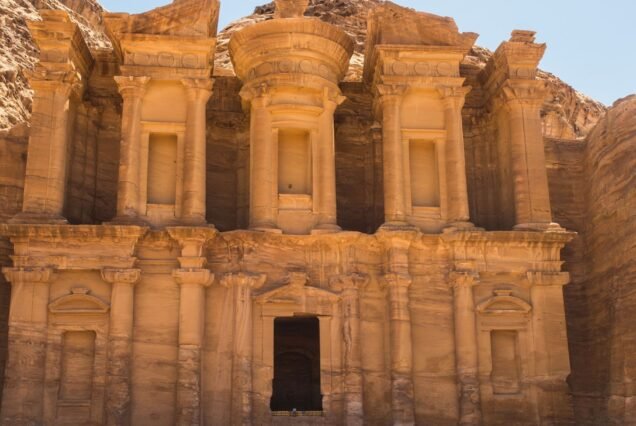
- Petra by Candlelight: 1,500 candles light the Siq. A Bedouin plays the rebab as the Treasury appears.
- Wadi Rum Night: Bedouin tea over fire, then silence so deep you hear your own heartbeat. The stars? There are too many. You’ll try counting. You’ll fail.
- Jerash and Amman: Walk colonnaded streets where Rome once ruled. End with a view from Amman's Citadel as the call to prayer echoes over the hills.
Petra was carved by the Nabataeans over 2,000 years ago and rediscovered in 1812. Jerash is one of the best-preserved Roman provincial cities in the world.




Reviews
There are no reviews yet.