



10
40
3+
Welcome to our signature Egyptian experience, a carefully crafted journey that will
transport you through millennia of fascinating history while providing moments of
tranquility and authentic cultural immersion. Whether you’re setting foot on Egyptian
soil for the first time or returning to explore more of this enchanting country, our
thoughtfully designed itinerary seamlessly blends the awe-inspiring monuments of
ancient civilizations with peaceful moments of reflection and genuine local encounters.
Our signature itinerary offers a comprehensive introduction to Egypt’s highlights, but we
understand that every traveler is unique. Perhaps you’d like to:
Whatever your preferences, our experienced travel planners will work with you to craft
the perfect Egyptian adventure tailored to your interests, schedule, and travel style.
As your plane descends over the sprawling metropolis of Cairo, the adventure begins.
Step off the plane and into the capable hands of our friendly representative who will be
waiting to greet you personally at the arrival gate, ready to assist with visa formalities
and luggage collection.
After navigating the bustling airport, sink into the comfort of our private, air-conditioned
vehicle as your knowledgeable driver weaves through Cairo's vibrant streets, offering
your first glimpse of this dynamic city where ancient and modern worlds collide. Watch
as minarets and skyscrapers create a unique skyline against the golden desert backdrop.
Upon arrival at your carefully selected 4 or 5-star accommodation, you'll be welcomed
with a refreshing traditional drink while completing a hassle-free check-in process. Once
settled in your comfortable room, meet your dedicated tour manager for a
comprehensive briefing about the exciting days ahead. The remainder of the evening is
yours to relax after your journey—perhaps enjoy dinner at the hotel's restaurant or take
a leisurely stroll around the neighborhood to begin soaking in the distinctive
atmosphere of Egypt's captivating capital.
After a delicious breakfast featuring local Egyptian flavors alongside international
options, your Egyptologist guide will greet you in the hotel lobby, eager to begin your
exploration of humanity's most enduring architectural achievements.
The short drive to the Giza Plateau builds anticipation, and nothing quite prepares you
for that magical moment when the Great Pyramids come into view—massive, imposing
structures that have stood for over 4,500 years. Your expert guide will bring the ancient
world to life, explaining the ingenious construction techniques and the fascinating
stories of the pharaohs Khufu, Khafre, and Menkaure who commissioned these
magnificent tombs.
Walk around the base of the Great Pyramid, marveling at the precision of the massive
limestone blocks. For the adventurous, there's the option to venture inside one of the
pyramids (additional ticket required) to experience the narrow passages that lead to the
burial chamber—a journey back in time that few forget.
Just a short walk away, the enigmatic Great Sphinx awaits with its mysterious gaze.
Standing before this limestone guardian with the body of a lion and the head of a
pharaoh, you'll learn about the various theories surrounding its construction and
purpose, as well as the legends that have surrounded it throughout the centuries.
Complete your Giza experience with a visit to the Valley Temple, where ancient priests
once prepared pharaohs for their journey to the afterlife. The remarkably preserved
granite columns and alabaster floors provide a glimpse into the sophisticated
craftsmanship of ancient Egyptian builders.
For those seeking an authentic desert experience, an optional camel ride around the
pyramids offers spectacular photo opportunities and a taste of traditional Bedouin
transportation methods. Feel the gentle sway as your camel carries you across the
golden sands, with the pyramids creating an unforgettable backdrop.
As the afternoon sun begins to soften, choose between two enchanting evening
experiences:
Witness the Pyramids Sound and Light Show, where dramatic narration, music, and
illuminations bring the ancient structures to life under the starry Egyptian sky. The
booming voice of the Sphinx serves as your storyteller, recounting tales of pharaohs and
gods as colorful lights dance across the ancient stones.
Alternatively, board a beautifully decorated boat for a dinner cruise along the legendary
Nile River. Glide past Cairo's twinkling lights while enjoying a sumptuous buffet of
Egyptian and international cuisine, accompanied by traditional music and mesmerizing
Tanoura spinning dancers who swirl in their colorful costumes—a perfect introduction to
Egyptian culture and hospitality.
Today's journey takes you deeper into Egypt's rich historical tapestry, beginning with the
renowned Egyptian Museum. Housing the world's largest collection of Pharaonic
antiquities, the museum is a treasure trove of artifacts spanning 5,000 years of Egyptian
civilization.
Your knowledgeable guide will navigate you through the most significant exhibits,
including the breathtaking golden mask and treasures of young King Tutankhamun.
Stand in awe before this gleaming funerary mask, crafted from 24 pounds of solid gold
and inlaid with semi-precious stones—a masterpiece of ancient craftsmanship that has
become an icon of ancient Egypt. Explore the collection of royal mummies (optional
extra ticket), where you can gaze upon the remarkably preserved faces of great pharaohs
like Ramses II and Queen Hatshepsut.
After a delightful lunch at a local restaurant where you can sample authentic Egyptian
cuisine such as koshari (a hearty mix of rice, lentils, and pasta topped with spiced
tomato sauce) or stuffed vine leaves, your afternoon is dedicated to exploring the
layered history of Old Cairo.
Wander through the atmospheric streets of the Coptic Quarter, where Christianity
flourished long before the arrival of Islam. Step inside the Hanging Church (Al-
Mu'allaqah), built atop the gatehouse of an old Roman fortress with its nave suspended
over a passage. Admire the intricate wooden ceiling designed to resemble Noah's Ark
and the beautiful icons that adorn the sanctuary.
Nearby, discover the Ben Ezra Synagogue, traditionally believed to mark the spot where
baby Moses was found in the reeds, which later became an important center for Jewish
worship in Egypt. The harmonious existence of these different religious sites within steps
of each other reflects Egypt's complex and tolerant religious history.
As the day begins to cool, immerse yourself in the sensory delight that is Khan El-Khalili,
Cairo's most famous bazaar. Dating back to the 14th century, this labyrinthine market is
a riot of color, sound, and scent. Navigate narrow alleys lined with shops selling
everything from intricate metalwork and hand-blown glass to aromatic spices and
delicate perfumes. Practice your bargaining skills with good-humored merchants, or
simply absorb the vibrant atmosphere while sipping mint tea at the historic El Fishawi
Café, a gathering place for artists and writers for over 200 years.
Return to your hotel in the evening with treasured souvenirs and memories of a day
spent connecting with Egypt's diverse cultural heritage.
This morning marks a transition in your Egyptian adventure as you prepare to leave the
bustling capital behind and journey southward to Luxor, the ancient city once known as
Thebes and often described as the world's greatest open-air museum.
Depending on your preference, this journey can take one of two forms:
For those who value efficiency and comfort, a short domestic flight whisks you from
Cairo to Luxor in just over an hour. Gaze out the window as the landscape transforms
from urban sprawl to the narrow green ribbon of fertile land that hugs the life-giving
Nile, surrounded by vast desert expanses.
Alternatively, experience travel as many Egyptians do aboard the overnight sleeper train.
This nostalgic journey allows you to watch the changing Egyptian countryside roll by
your window during daylight hours before retiring to your private cabin. The gentle
rocking of the train and the rhythmic clickety-clack of wheels on tracks lull you to sleep
as you make your way south under a canopy of desert stars.
Upon arrival in Luxor, settle into your comfortable hotel with views of the Nile or the
desert mountains. Take some time to refresh and relax by the pool, perhaps enjoying a
cool hibiscus tea (karkadeh), a local specialty known for its deep ruby color and
refreshing taste.
For those interested in authentic cultural experiences, we offer an optional evening visit
to a local Nubian family home. Cross the Nile to the less-visited West Bank and enter a
traditional colorfully painted house where your host family welcomes you with warm
hospitality. Help prepare (or simply observe) the creation of traditional dishes like bamia
(okra stew) or mahshi (stuffed vegetables) before sitting down to share this home-
cooked meal. As you dine, learn about Nubian customs, language, and daily life, perhaps
even receiving a henna hand decoration from the women of the family—a meaningful
cultural exchange that goes beyond typical tourist experiences.
After breakfast on your hotel terrace overlooking the shimmering Nile, your Egyptologist
guide will meet you for a day exploring the magnificent temples of Luxor's East Bank.
Begin at the awe-inspiring Karnak Temple Complex, a vast open-air museum spanning
over 200 acres and built over more than 2,000 years by generation after generation of
pharaohs. Enter through the Avenue of Ram-headed Sphinxes and into the Great Court,
where you're immediately dwarfed by massive columns and towering statues.
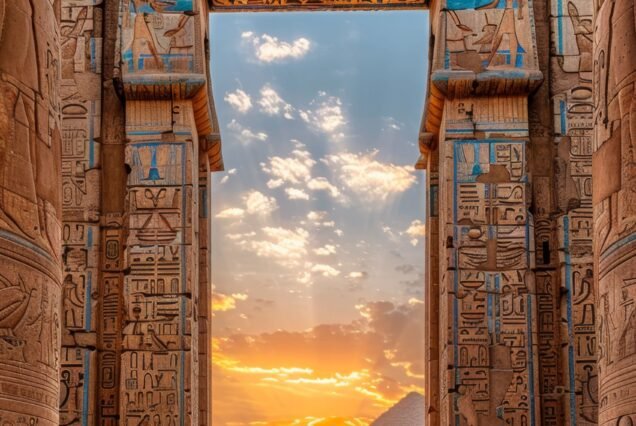
The highlight of Karnak is the Great Hypostyle Hall, a forest of 134 massive columns
arranged in 16 rows, each carved with intricate hieroglyphics and once brightly painted.
Your guide will help you decipher the stories told in the relief carvings that cover the
walls—tales of pharaonic victories, religious ceremonies, and offerings to the gods.
Wander through the various temples dedicated to the Theban triad of gods—Amun, Mut,
and Khonsu—and discover hidden sanctuaries and sacred lakes within this enormous
complex.
After a relaxing lunch at a local restaurant with views of the Nile, perhaps sampling
freshly caught fish prepared with aromatic herbs and spices, enjoy some time to rest
during the heat of the day.
As the afternoon sun becomes more gentle, continue to Luxor Temple, a graceful
sanctuary in the heart of the modern city. Unlike most temples dedicated to a god or
pharaoh in death, Luxor Temple was dedicated to the rejuvenation of kingship, possibly
the place where many pharaohs were crowned.
Enter through the massive pylon gateway flanked by statues of Ramses II and obelisks
(one of which now stands in Paris' Place de la Concorde). Inside, admire the colonnade
of graceful papyrus columns, intricate bas-reliefs, and the beautiful sanctuary. The
temple is particularly magical as the sun begins to set, when the golden light bathes the
ancient sandstone, creating an ethereal atmosphere.
Connecting Luxor and Karnak temples is the Avenue of Sphinxes, recently restored after
being buried under the modern city for centuries. Stroll along a section of this 2.7 km
ancient processional way lined with sphinx statues, imagining the grand religious
festivals when the sacred barque carrying the statue of Amun would be transported
between the temples amidst great ceremony, music, and celebration.
As evening falls, the temples are beautifully illuminated, offering a different perspective
on their grandeur. Return to your hotel for dinner, or opt to explore Luxor's corniche, the
waterfront promenade where locals gather in the cool evening air to socialize, shop, and
enjoy the views across the Nile.
Rise early to make the most of the cooler morning hours as you cross the Nile to explore
the West Bank—the ancient necropolis where Egyptians built elaborate tombs for their
pharaohs and nobles.
Your first stop is the Valley of the Kings, the isolated desert valley where for nearly 500
years (16th to 11th century BCE), tombs were constructed for the pharaohs and powerful
nobles of the New Kingdom. Hidden away in this barren landscape, the Egyptian rulers
hoped to prevent tomb robbery and ensure their safe passage to the afterlife.
With your guide, descend into several of the most significant tombs (your ticket includes
entry to three, with special tombs available for an additional fee). Marvel at the
astonishingly vivid colors of the wall paintings depicting the pharaoh's journey through
the underworld, as well as scenes from daily life, religious rituals, and Egyptian
mythology. The level of preservation is remarkable, with many tombs looking as though
the artists completed their work just decades rather than millennia ago.
Continue to the Temple of Hatshepsut at Deir el-Bahari, one of Egypt's most distinctive
monuments. This elegant terraced temple was built by Egypt's most successful female
pharaoh, who ruled for 20 prosperous years. Set against the dramatic backdrop of
towering limestone cliffs, the temple's clean lines and perfect symmetry represent a high
point in ancient Egyptian architecture. Your guide will recount the fascinating story of
Hatshepsut's rise to power, her achievements, and the subsequent attempt to erase her
from history.
Before returning to the East Bank, stop to admire the Colossi of Memnon, two massive
stone statues of Pharaoh Amenhotep III that have stood guard over his now-vanished
mortuary temple for more than 3,400 years. Rising 60 feet above the plain, these seated
figures have witnessed the rise and fall of countless civilizations along the Nile Valley.
By midday, it's time for a new chapter in your Egyptian adventure as you board your
floating home for the next few nights—a luxurious 5-star Nile cruise ship. Settle into your
comfortable cabin with panoramic river views, then enjoy a welcome lunch on board as
the ship begins its gentle journey upstream toward Edfu.
Spend the afternoon relaxing on the sun deck, watching rural Egyptian life unfold along
the riverbanks—farmers tending their fields using methods unchanged for centuries,
children waving excitedly from the shore, and water buffalo cooling themselves in the
shallows. This timeless scenery, framed by palm trees and set against the backdrop of
golden desert hills, offers a peaceful contrast to the morning's archaeological
explorations.
As the sun sets over the Nile, casting a golden glow across the water, enjoy dinner on
board followed by entertainment that might include a colorful "galabeya party" where
you can dress in traditional Egyptian attire, or a demonstration of Arabic music and
dance.
Wake to the gentle motion of the ship and perhaps catch a magical sunrise over the Nile
before breakfast. By mid-morning, your ship docks at Edfu, where an unusual mode of
transportation awaits—horse-drawn carriages that will clip-clop through the town to the
Temple of Horus.
The journey by carriage offers glimpses of everyday Egyptian life as you pass through the
streets of this provincial town. Upon arrival at the temple, you'll be struck by its
exceptional state of preservation. Built during the Ptolemaic period (237-57 BCE), the
Temple of Horus is considered the most complete and best-preserved temple in Egypt,
having been protected from the elements by desert sand until its excavation in the 19th
century.
Step through the massive gateway adorned with reliefs of Horus, the falcon-headed god,
and enter a world frozen in time. Your guide will lead you through the various chambers,
explaining the significance of the intricate hieroglyphics that cover the walls. These
carvings tell stories of the temple's construction, religious rituals, and the mythological
battle between Horus and his uncle Seth. Of particular interest is the Sanctuary of Horus,
which still contains the granite shrine that once housed the god's cult image.
Return to your cruise ship for lunch as you continue sailing toward Kom Ombo, arriving
in the late afternoon. The Temple of Kom Ombo occupies a stunning location on a bend
of the Nile, and as your ship approaches, you'll see its columns dramatically silhouetted
against the sky.
This unique double temple is dedicated to two gods: Sobek, the crocodile god of fertility,
and Horus, the falcon-headed god. The temple is perfectly symmetrical, with two
entrances, two hypostyle halls, and two sanctuaries. Your guide will point out the
detailed surgical instruments depicted in reliefs on the temple walls—some of the
earliest known medical illustrations—as well as the ancient nilometer used to measure
the all-important Nile flood levels.
Don't miss the Crocodile Museum adjacent to the temple, which displays some of the
mummified crocodiles discovered in the area, testament to the ancient reverence for
Sobek.
As twilight approaches, return to your ship for dinner as you continue sailing toward
Aswan. The evening might feature Nubian music and dance performances, introducing
you to the distinct cultural traditions of Egypt's southern regions. Fall asleep to the
gentle lapping of the Nile waters against the hull, anticipating tomorrow's arrival in
beautiful Aswan.
This morning, your ship docks in Aswan, Egypt's southernmost city and perhaps its most
scenic. Set against granite cliffs and with the Sahara pressing in from the west, Aswan
has a distinctly African atmosphere and a more relaxed pace than the northern cities.
After breakfast, disembark for a day of exploration beginning with the Philae Temple
complex. Board a motorboat for a short ride to Agilkia Island, where the temple was
relocated stone by stone after the construction of the Aswan High Dam threatened to
submerge it forever. Dedicated to the goddess Isis, this Ptolemaic temple complex is a
harmonious blend of Egyptian and Greco-Roman architectural styles. Wander through
colonnaded courtyards and sanctuaries adorned with reliefs depicting Isis, Osiris, and
Horus, while your guide explains the temple's history and the painstaking UNESCO-led
project that saved it from the rising waters.
Continue to the Aswan High Dam, an engineering marvel of the modern world.
Completed in 1970, this massive structure controls the annual flooding of the Nile and
generates hydroelectricity for much of Egypt. From the top of the dam, take in
panoramic views of Lake Nasser, one of the world's largest man-made lakes, stretching
south into Sudan.
Nearby lies the Unfinished Obelisk, abandoned in its quarry when cracks appeared
during its carving. Had it been completed, it would have been the largest obelisk ever
erected in ancient Egypt, weighing nearly 1,200 tons. The site provides fascinating
insights into ancient stone-cutting techniques—you can still see the marks of workers'
tools and the ingenious methods used to extract these massive monuments from the
living rock.
Return to your cruise ship for lunch and some relaxation during the heat of the day. In
the late afternoon, when the light turns golden, embark on an optional but highly
recommended felucca ride. These traditional wooden sailboats with their distinctive
triangular sails have plied the Nile for thousands of years. As your skilled Nubian captain
harnesses the wind, glide silently past Elephantine Island, the lush Botanical Gardens on
Kitchener's Island, and the grand Aga Khan Mausoleum perched high on the western
bank.
The felucca ride offers perfect opportunities for photography as the setting sun bathes
everything in a warm glow and river birds swoop low over the water. Your captain might
break into traditional Nubian songs as you drift along, adding to the magical
atmosphere of this peaceful excursion.
Return to your cruise ship for a farewell dinner, perhaps featuring Nubian specialties like
bamia (okra stew) or duck with molokheya (a nutritious green soup). Spend your final
night on board reflecting on the wonders you've seen along Egypt's lifeline, the eternal
Nile.
For early risers, we offer an optional but highly recommended excursion to Abu Simbel,
one of Egypt's most spectacular monuments. This pre-dawn departure by road (or the
more expensive but time-saving flight option) takes you deep into the desert near the
Sudanese border.
The journey is rewarded when you first catch sight of the four colossal statues of Ramses
II, each 66 feet high, guarding the entrance to his temple carved into the mountainside.
Built to impress Egypt's southern neighbors and deify Ramses II, the scale and artistry of
Abu Simbel is truly awe-inspiring. Even more remarkable is the fact that, like Philae
Temple, the entire complex was dismantled and moved to higher ground in the 1960s
when the creation of Lake Nasser threatened to submerge it.
Step inside the cool interior to admire the grand hypostyle hall with its massive pillars
and walls covered in vivid relief carvings showing Ramses' military victories, particularly
his famous (if somewhat exaggerated) triumph at the Battle of Kadesh. Twice a year, on
February 22 and October 22, the sun penetrates the entire length of the temple to
illuminate the statues in the sanctuary—a testament to the ancient Egyptians'
astronomical knowledge.
Adjacent to the Great Temple is the smaller but equally beautiful Temple of Hathor,
dedicated to Queen Nefertari, Ramses' favorite wife. The facade features six statues, four
of Ramses II and two of Nefertari, an unusual honor indicating her elevated status.
After exploring these magnificent temples, return to Aswan for your afternoon flight to
Cairo. Upon arrival, transfer to your hotel in the city or near the airport, depending on
your departure time the following day.
Spend your final evening in Egypt reflecting on your journey, perhaps enjoying a farewell
dinner at a local restaurant or relaxing at your hotel, organizing your photographs and
souvenirs from an unforgettable adventure through time.
Depending on your flight schedule, you might have time for some last-minute shopping
or relaxation before your transfer to Cairo International Airport. Your representative will
assist with check-in formalities and bid you a warm farewell as you depart with
memories to last a lifetime.
As your plane lifts off, gaze down at the Nile Valley that has been the stage for your
Egyptian adventure—a ribbon of green cutting through the desert, nurturing one of
humanity's greatest civilizations for millennia. The pyramids, temples, and tombs you've
explored are not just monuments to Egypt's past glory but living connections to our
shared human heritage.


Reviews
There are no reviews yet.